
Why Efficient Commercial Kitchens Are One of the Fastest Ways to Improve Restaurant Profit Margins?
https://uploads.prod01.sydney.platformos.com/instances/647/assets/modules/homepage/webapp_uploads/blog/images/sck-restaurant-profit-11785492775880-1785492777332.png?updated=1785492781&updated=1789454290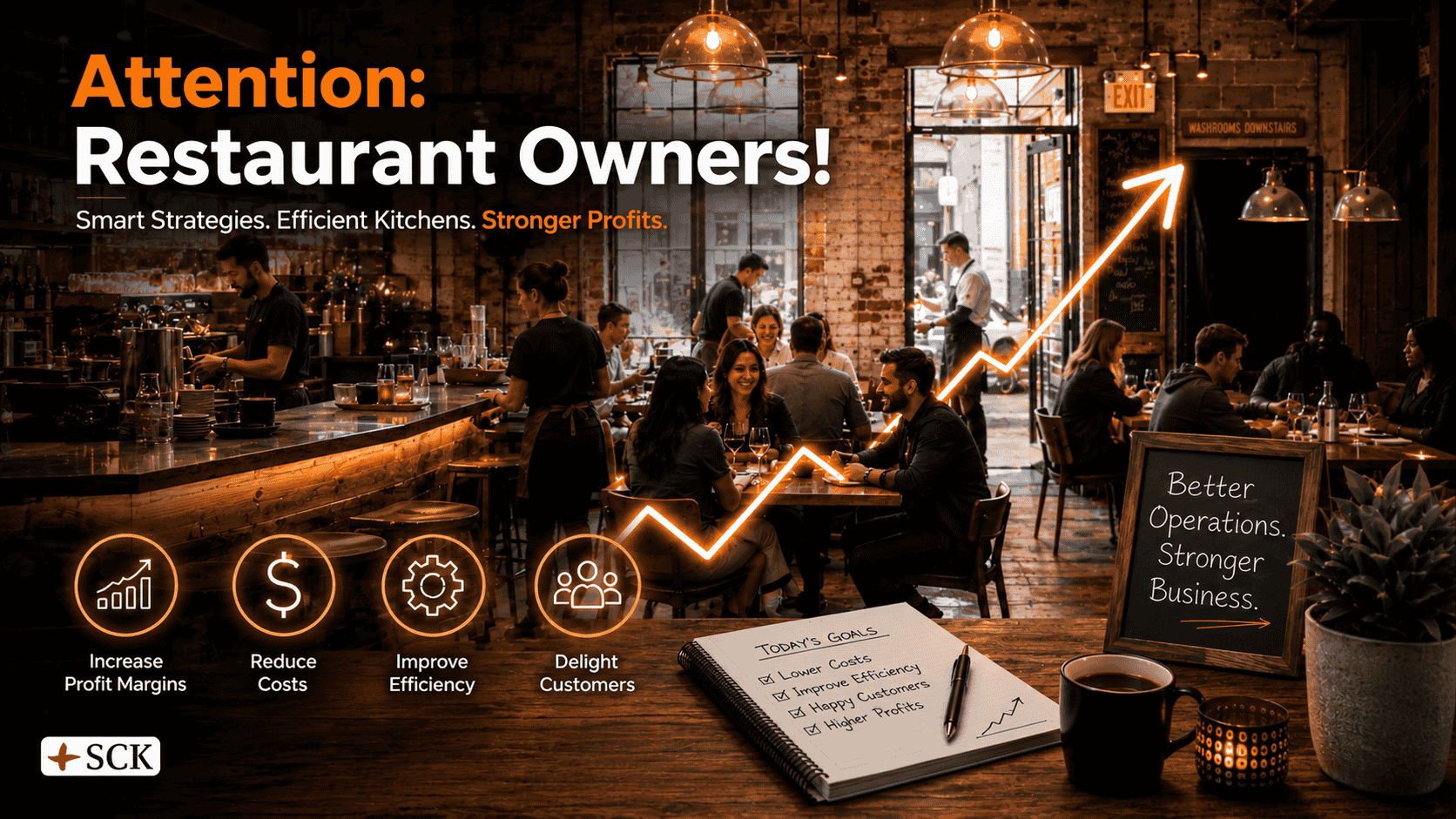
How Can Restaurants Increase Profit Margins Without Simply Raising Prices?
Running a profitable café or restaurant has never been easy. While Australians continue to enjoy dining out, hospitality businesses face increasing pressure from rising food costs, labour shortages, higher utility bills and growing customer expectations. Simply increasing menu prices is rarely enough to protect profit margins, especially in a competitive market where customers have plenty of choices.
The good news is that improving profitability is often about working smarter rather than charging more. Small improvements across your kitchen, equipment, workflow and purchasing decisions can add up to significant long-term savings while delivering a better customer experience.
At Sydney Commercial Kitchens (SCK), we work with hospitality businesses across Australia every day. We have seen that the most successful venues focus on efficiency, consistency and reliability just as much as great food and service.
Why Restaurant Profit Margins Continue to Face Pressure
Hospitality businesses today operate in a very different environment from a decade ago.
Many operators are dealing with:
- Rising food and ingredient costs
- Higher electricity and gas prices
- Increasing wages and staffing challenges
- Greater competition from new cafés, restaurants and takeaway businesses
- Customer expectations for faster service and consistent quality
- Higher maintenance and equipment replacement costs
While these challenges affect almost every venue, successful businesses find ways to improve efficiency instead of relying solely on higher menu prices.
Where Restaurants Commonly Lose Profit
Many owners assume profits are lost only through food costs. In reality, profit leaks often occur throughout daily operations.
Common areas include:
Food Waste
Over-ordering, poor storage and inconsistent portion control can quickly reduce profitability.
Equipment Downtime
A refrigeration breakdown or dishwasher failure during service can disrupt the entire kitchen, resulting in lost sales and expensive emergency repairs.
Slow Kitchen Workflow
When staff spend unnecessary time walking between workstations or waiting for equipment, labour costs increase while customer wait times grow.
High Energy Consumption
Older commercial equipment often consumes significantly more electricity and water than newer energy-efficient alternatives.
Poor Production Planning
Preparing too much food creates waste, while preparing too little risks lost sales and unhappy customers.
Seven Practical Ways to Improve Restaurant Profit Margins
1. Improve Kitchen Workflow
A well-designed commercial kitchen allows staff to move efficiently between preparation, cooking, plating and cleaning stations. Reducing unnecessary movement saves valuable time during busy service periods, improves communication between team members and helps meals reach customers more quickly. Even small workflow improvements can reduce labour costs while increasing the number of customers served.
2. Invest in Reliable Commercial Equipment
Choosing commercial kitchen equipment should be viewed as a long-term business investment rather than simply comparing purchase prices. Reliable equipment is typically more energy efficient, requires fewer repairs and delivers more consistent performance throughout the day. Over time, dependable equipment can reduce operating costs while helping staff work faster and maintain consistent food quality.
3. Reduce Food Waste
Every kilogram of food thrown away directly impacts profitability. Effective stock management, proper food storage and consistent portion control all help minimise unnecessary waste. Equipment such as commercial refrigeration, vacuum sealers and blast chillers can also extend product freshness, giving businesses greater flexibility while improving food safety and reducing spoilage.
4. Increase Kitchen Efficiency
Modern commercial kitchen equipment is designed to help operators produce more with fewer resources. Faster cooking times, lower energy consumption and easier cleaning all contribute to improved productivity throughout the day. Investing in equipment that matches your menu and service volume can reduce labour pressure while maintaining consistent food quality during peak trading periods.
5. Prioritise Preventative Maintenance
Unexpected equipment breakdowns are often far more expensive than routine servicing. Establishing a preventative maintenance schedule helps identify minor issues before they become costly repairs, while also extending equipment lifespan and improving reliability. Well-maintained equipment generally operates more efficiently, uses less energy and reduces the risk of interruptions during busy service.
6. Train Staff for Consistency
Even the best commercial kitchen equipment performs at its highest level when staff understand how to operate it correctly. Ongoing training helps improve food consistency, portion control, cleaning procedures and workplace safety. Clear operating procedures also reduce mistakes, improve productivity and make it easier for new employees to become confident in their roles.
7. Make Smarter Purchasing Decisions
When purchasing new equipment, consider the total cost of ownership rather than focusing solely on the initial purchase price. Factors such as energy efficiency, servicing requirements, expected lifespan and productivity gains often have a much greater impact on long-term profitability. Selecting equipment that suits your menu, kitchen layout and future business growth can provide lasting value while supporting more efficient day-to-day operations.
How Modern Commercial Kitchen Equipment Improves Profitability
Commercial kitchen equipment has advanced significantly over the past decade. Today's appliances are designed to do much more than cook, refrigerate or clean. They help hospitality businesses reduce operating costs, improve workflow, save energy and deliver more consistent food quality.
Investing in modern commercial kitchen equipment can be one of the most effective ways to improve long-term profitability. Newer combi ovens, high-speed ovens, commercial refrigeration, dishwashers, blast chillers, food preparation equipment and ice machines are designed to reduce energy and water consumption, improve workflow and deliver more consistent results.
Many models now feature smart controls, programmable settings and energy-efficient technology that help minimise labour, reduce downtime and simplify day-to-day operations. While older equipment may still be operational, upgrading to newer technology can lower operating costs, improve productivity and provide a stronger return on investment over its lifespan.
At Sydney Commercial Kitchens, we help hospitality businesses compare commercial kitchen equipment based on performance, reliability and long-term value, making it easier to choose solutions that support greater efficiency, business growth and stronger profit margins.
Buying Guide: What Should Restaurant Owners Consider?
Choosing commercial kitchen equipment is about more than comparing prices. The right equipment should improve efficiency, reduce operating costs and support your business for years to come. Before investing, consider how each purchase will fit your daily operations and long-term goals.
Business Type
Different hospitality businesses have different needs. A café, restaurant, bakery, hotel or catering business will each require equipment suited to their menu, service style and production volume.
Daily Production
Consider your busiest trading periods, not just average demand. Equipment should comfortably handle peak service without slowing production or compromising food quality.
Running Costs
Look beyond the purchase price. Energy, water, maintenance and labour all contribute to the total cost of ownership. Efficient equipment often delivers greater long-term savings.
Available Space
Ensure new equipment fits your kitchen layout and improves workflow. A well-planned workspace helps staff work faster, reduces congestion and supports safer operations.
Service and Support
Check that spare parts, qualified technicians and after-sales support are readily available throughout Australia. Reliable service can minimise downtime and protect your investment.
Future Growth
Choose equipment that can grow with your business. Investing in the right capacity today may help avoid expensive upgrades as customer demand increases.
Making informed purchasing decisions can improve productivity, lower operating costs and deliver better long-term value. At Sydney Commercial Kitchens, we help hospitality businesses compare equipment based on performance, reliability and operational efficiency, making it easier to invest with confidence.
Common Mistakes That Reduce Restaurant Profitability
Many hospitality businesses unintentionally reduce profits through everyday decisions that seem minor but can have a significant long-term impact. Recognising these common mistakes early can help improve efficiency, reduce unnecessary costs and create a more profitable operation.
Some of the most common issues include:
- Purchasing equipment based only on the lowest purchase price instead of long-term value.
- Ignoring ongoing operating costs such as energy, water and maintenance.
- Delaying routine servicing, leading to costly breakdowns and unexpected downtime.
- Choosing equipment that is too large or too small for the business's actual production needs.
- Poor stock rotation, resulting in unnecessary food waste and spoilage.
- Inconsistent food preparation that affects portion control and customer satisfaction.
- Underestimating the importance of an efficient kitchen layout and workflow.
Addressing these issues can improve productivity, reduce waste and lower operating costs. Regularly reviewing equipment performance, staff procedures and kitchen efficiency allows restaurant owners to identify opportunities for improvement before they become expensive problems. Even small operational changes can deliver meaningful savings over time while supporting better customer service and stronger long-term profitability.
Frequently Asked Questions
What is a healthy restaurant profit margin?
Profit margins vary depending on the type of venue, location and operating costs. Successful hospitality businesses focus on improving efficiency rather than relying solely on higher prices.
Can new kitchen equipment improve profitability?
Yes. Reliable, energy-efficient commercial equipment can reduce labour, waste, downtime and utility costs while improving consistency.
Should I always buy the cheapest commercial equipment?
Not necessarily. Lower-priced equipment may cost more over its lifetime through higher energy use, repairs and reduced productivity.
How can I reduce food waste?
Better inventory management, appropriate refrigeration, portion control, staff training and food preservation equipment all help minimise waste.
Is preventative maintenance worth the cost?
Regular servicing usually costs far less than emergency repairs and unexpected business interruptions.
Does kitchen layout affect profits?
Absolutely. Efficient kitchen design improves workflow, reduces labour requirements and helps staff serve customers more quickly.
How often should commercial kitchen equipment be replaced?
Replacement depends on equipment condition, maintenance history, operating costs and whether newer technology offers meaningful efficiency improvements.
How can Sydney Commercial Kitchens help?
Sydney Commercial Kitchens works with hospitality businesses across Australia to recommend commercial kitchen equipment suited to each venue's menu, production requirements, available space and long-term operational goals. Our focus is helping customers make informed purchasing decisions that support productivity, reliability and long-term value.
Final Verdict
Improving restaurant profit margins is rarely about increasing prices alone. The most successful hospitality businesses continually look for ways to reduce waste, improve workflow, increase efficiency and invest in equipment that delivers reliable performance over many years.
Whether you operate a café, restaurant, hotel, club, bakery or catering business, thoughtful purchasing decisions can significantly reduce operating costs while supporting better customer experiences. At Sydney Commercial Kitchens, we believe informed buyers make better long-term investments. By combining practical advice with access to a wide range of commercial kitchen equipment, we help hospitality businesses choose solutions that improve productivity, support sustainable growth and maximise profitability well into the future.
Make your business our next satisfied client
If you are looking to buy equipment for your cafe or restaurant at the best price, then let us do the hard work and source the right product for your restaurant, cafe, takeaway or commercial kitchen.
Our goal at SCK is to sell you products that add value to your business.
We power your kitchen!
Sydney Commercial Kitchenshttps://uploads.prod01.sydney.platformos.com/instances/647/assets/modules/homepage/images/sck.svg?updated=1789454290