
Commercial Ice Cream Makers: Is Making Your Own Ice Cream and Gelato Worth It?
https://uploads.prod01.sydney.platformos.com/instances/647/assets/modules/homepage/webapp_uploads/blog/images/artisanal-gelato-kitchen-showcase1793407946211-1793407946855.jpg?updated=1793407951&updated=1793407951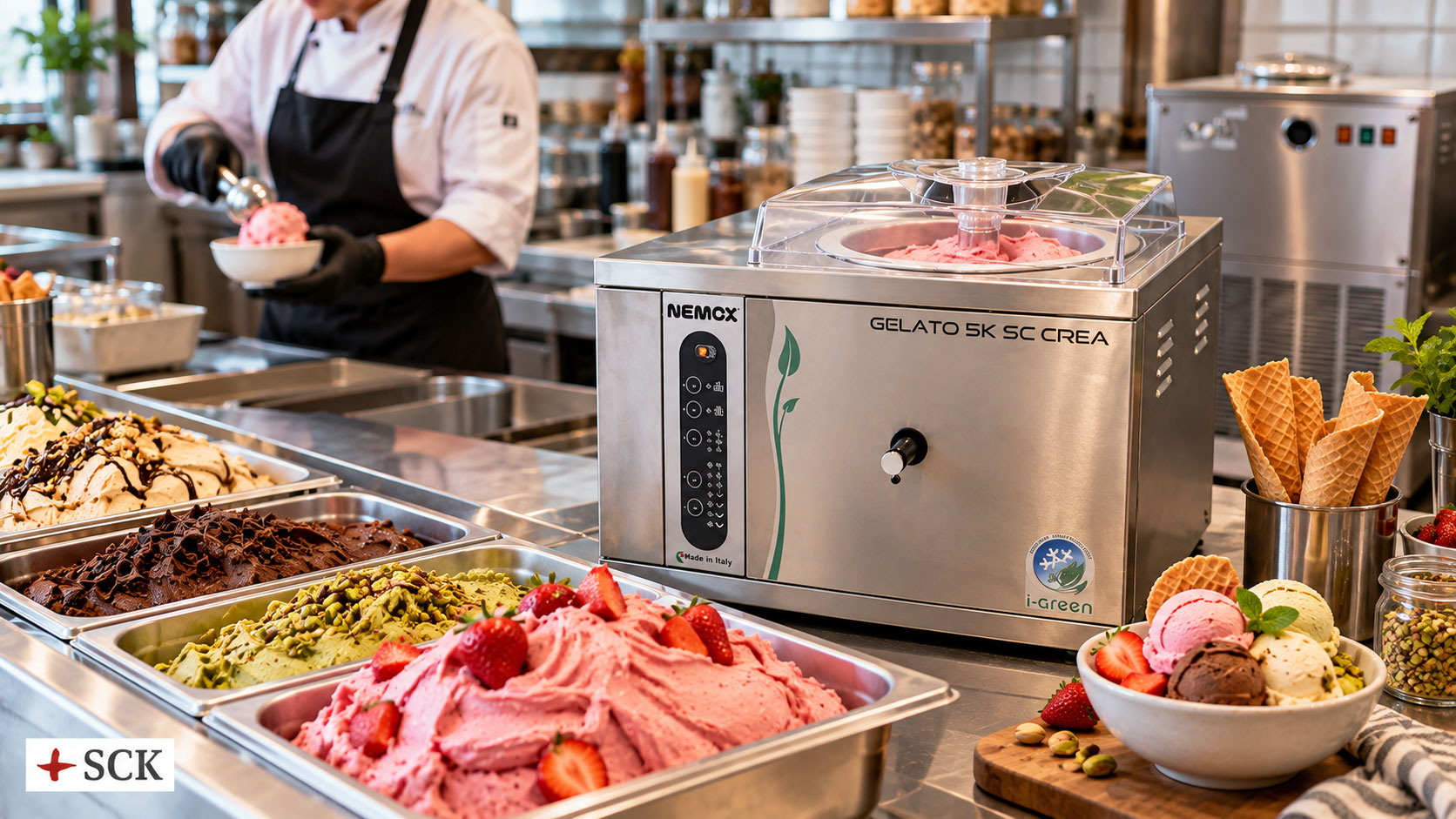
Ice cream is no longer just a summer treat. Across Australian cafés, restaurants, hotels and dessert businesses, house-made ice cream and gelato can create opportunities to introduce signature flavours, improve dessert presentation and offer customers something they cannot easily find elsewhere.
But producing frozen desserts in-house involves more than combining ingredients and switching on a machine. Operators need to consider batch capacity, preparation time, ingredient costs, food safety, storage and whether their kitchen can support regular production.
A commercial ice cream maker can make this process more manageable, particularly when the equipment matches the venue's expected demand.
Two established Italian brands, Musso and Nemox, offer different approaches to producing ice cream, gelato and sorbet in professional foodservice environments. Both are available through Sydney Commercial Kitchens' ice cream maker range.
This guide explores how these machines work, what distinguishes the available models and whether making frozen desserts in-house makes commercial sense.
Why Are More Hospitality Businesses Considering House-Made Ice Cream?
For restaurants and cafés, desserts can be an opportunity to increase average customer spend without significantly expanding the main kitchen menu.
House-made ice cream also allows chefs to create flavours that complement existing dishes. A restaurant serving warm chocolate fondant might develop its own vanilla bean ice cream, while a café could offer espresso gelato or seasonal fruit sorbet.
The advantages extend beyond flavour.
Producing frozen desserts in-house gives operators greater control over ingredients, sweetness, texture and serving sizes. It also creates opportunities to accommodate particular dietary requirements, provided suitable recipes and allergen management procedures are followed.
Potential commercial benefits include:
- Creating distinctive desserts that support a venue's identity.
- Using seasonal ingredients in rotating flavours.
- Controlling recipes and portion sizes.
- Reducing reliance on selected ready-made desserts.
- Introducing premium dessert options.
However, these advantages are not automatic. Labour, cleaning, refrigeration, ingredient preparation and wastage must all be considered before investing.
A venue selling only a few portions each week may find purchased ice cream more economical. A restaurant with consistent dessert demand and opportunities for premium pricing may benefit from producing its own.
What Is the Difference Between Commercial Ice Cream and Gelato Makers?
Ice cream and gelato are closely related frozen desserts, but they are not identical.
Traditional ice cream generally contains more fat and incorporates more air during freezing. Gelato is commonly made with a lower-fat base and less incorporated air, giving it a denser texture and a more pronounced flavour.
Both products require controlled freezing and mixing.
Commercial batch ice cream makers use refrigeration and an internal mixing mechanism to freeze a prepared liquid mixture while limiting the formation of large ice crystals.
The resulting texture depends on several factors, including recipe formulation, sugar concentration, fat content, mixing speed, freezing conditions and serving temperature.
Many professional batch machines can produce both ice cream and gelato, although the finished product depends on the recipe and equipment settings.
This makes batch ice cream makers particularly useful for venues that want to produce several frozen desserts without purchasing separate machines for each recipe.
What Makes Musso Ice Cream Makers Suitable for Professional Kitchens?
Musso Ice Cream Makers
Musso is an Italian manufacturer known for stainless steel ice cream machines with straightforward operation and a range of benchtop and floor-standing models.
Musso machines have long been used for producing small-batch ice cream and gelato. Their appeal lies in relatively simple controls, solid construction and dedicated freezing and mixing functions.
For kitchens that prefer equipment without complicated programming, Musso offers a practical approach to frozen dessert production.
The Musso range at Sydney Commercial Kitchens includes several models suited to different production requirements.
Musso L1 Mini: Is It Suitable for Small Cafés?
The Musso L1 Mini is a compact benchtop machine designed for smaller production requirements.
Its listed specifications include a 0.7-litre bowl and a rated output of up to 2 litres per hour.
This makes it worth considering for cafés, boutique restaurants and venues that want to experiment with house-made frozen desserts without dedicating substantial kitchen space to production.
For example, a café offering a limited selection of signature ice cream flavours may prefer preparing smaller batches rather than producing large quantities that could remain unsold.
The L1 Mini is not intended to replace a high-output production system, but it may suit businesses with modest demand and sufficient preparation time.
Musso L2 Stella: A Step Up in Production Capacity
The Musso L2 Stella offers a larger 1.5-litre bowl and a listed output of up to 4.5 litres per hour.
This additional capacity may be useful for restaurants producing several batches for evening dessert service or cafés with consistent demand for house-made ice cream.
Its benchtop configuration allows it to fit into suitable preparation areas without requiring dedicated floor space.
For venues that have established demand but do not need continuous large-scale production, the L2 Stella may provide a practical balance between equipment size and output.
Musso L3 Giardino and L3R Club: When Is Greater Capacity Necessary?
As production requirements increase, operators may need equipment that can produce more ice cream during scheduled preparation periods.
The Musso L3 Giardino is a benchtop model with a listed 2.5-litre bowl and an output of up to 7.5 litres per hour.
The Musso L3R Club offers the same listed bowl capacity and hourly output in a floor-standing configuration.
These models may suit busy restaurants, hotels, caterers and dessert businesses producing multiple flavours.
The choice between benchtop and floor-standing equipment depends on available space, workflow and how frequently staff need to access the machine.
Musso L4 Consul: For Higher Production Requirements
The Musso L4 Consul is a floor-standing machine with a listed 3.5-litre bowl and rated production of up to 10.5 litres per hour.
It is designed for businesses requiring greater batch capacity than smaller benchtop models can provide.
For a hotel preparing frozen desserts for restaurant service and functions, larger production capacity may reduce the number of separate batches required.
However, operators should still evaluate available freezer storage, production scheduling and staff resources before selecting a higher-output machine.
The published capacities are indicative equipment ratings rather than guaranteed production volumes for every recipe or operating condition.
Sydney Commercial Kitchens
Why Should Australian Businesses Consider Nemox Gelato Machines?
Nemox Gelato Machines
Nemox is another Italian manufacturer offering frozen dessert equipment, including models with automatic production programs and electronic controls.
While Musso places considerable emphasis on straightforward operation, selected Nemox machines offer additional automation that may be valuable in professional kitchens.
Automatic production and storage programs can help operators manage certain stages of the freezing process, although they do not eliminate the need for staff supervision, cleaning or safe frozen storage.
The Nemox I-Green range also reflects the manufacturer's emphasis on refrigeration technology and environmental considerations.
For businesses comparing Nemox equipment, the important factors are production capacity, available programs, workflow requirements and the level of operator involvement.
Nemox Gelato Chef 3L and 5L: Compact Production Options
The Nemox Gelato Chef 3L Auto I-Green is listed with an output of up to 3 litres per hour.
The larger Gelato Chef 5L Auto I-Green offers a listed output of up to 4.5 litres per hour.
Both are benchtop machines suited to businesses considering regular small-batch production.
These models may appeal to cafés, restaurants and smaller dessert operations where available preparation space is limited.
They also provide an entry point for businesses that want to produce several flavours without investing immediately in a larger production machine.
Nemox Gelato 4K Touch: What Does Automatic Operation Offer?
The Nemox Gelato 4K Touch I-Green has a listed production capacity of up to 5.6 litres per hour.
Its touch-operated controls provide an alternative to more traditional manual interfaces.
For kitchens where several employees share dessert preparation responsibilities, straightforward program selection may help support a more consistent production routine.
However, operators still need to follow the correct recipes, ingredient preparation procedures and manufacturer instructions.
Automation cannot compensate for an unsuitable recipe or incorrect storage conditions.
Nemox Gelato 5K CREA SC: Suitable for Regular Dessert Production?
The Nemox Gelato 5K CREA SC I-Green offers a listed output of up to 7 litres per hour and four automatic storage programs.
These features may be useful for venues producing frozen desserts frequently and requiring additional control over the production process.
For example, a restaurant preparing several flavours before dinner service may benefit from programmed operation while kitchen staff complete other preparation tasks.
It is important to distinguish the machine's temporary product-holding functions from long-term frozen storage.
Finished ice cream and gelato should be transferred and stored according to the recipe, food safety requirements and manufacturer recommendations.
Nemox Gelato 6K CREA: When Does Higher Output Make Sense?
The Nemox Gelato 6K CREA I-Green is listed with an output of up to 10 litres per hour.
It includes four production programs and four storage programs, providing flexibility for businesses with different recipes and preparation requirements.
This model may suit larger restaurants, catering operations, hotels and dessert-focused businesses producing frozen desserts regularly.
Its higher output should be assessed alongside ingredient preparation, available storage and the number of flavours required.
A machine capable of producing more ice cream is only beneficial when the kitchen can use or store that output effectively.
Sydney Commercial Kitchens
Musso vs Nemox: Which Ice Cream Maker Is Better for Your Business?
There is no single answer because both brands serve different operational requirements.
Musso may appeal to operators who prefer traditional controls, stainless steel construction and straightforward batch production. Nemox may suit businesses looking for additional automation, particularly in selected higher-capacity models.
Rather than choosing solely by brand, operators should compare how each machine fits their existing kitchen.
A small café producing one signature flavour may prioritise a compact footprint and manageable batch size. A hotel preparing several flavours for restaurant service, banquets and functions may place greater importance on hourly output and production scheduling.
The following considerations are particularly important:
Production volume: Estimate the number of portions required during a typical service, rather than selecting a machine based only on its maximum hourly rating.
Available space: Benchtop machines still require suitable working space, ventilation clearance and safe access for cleaning.
Operator involvement: Consider whether staff prefer straightforward manual controls or the additional functions offered by selected automatic models.
Menu variety: Producing several flavours may require more preparation, cleaning and changeover time than producing a single flavour.
Budget: Compare equipment costs with realistic production demand, ingredient expenditure, labour and potential dessert revenue.
For many hospitality operators, the best commercial ice cream maker is not necessarily the largest or most automated model. It is the one that produces the required quantity consistently without disrupting kitchen operations.
How Much Ice Cream Can a Commercial Ice Cream Maker Produce?
Production capacity is one of the most important specifications when comparing commercial ice cream makers.
Manufacturers commonly express capacity in litres per batch or litres per hour. These measurements describe different aspects of performance.
Batch capacity indicates the quantity a machine can process during an individual production cycle, while hourly output estimates how much finished product may be produced under specified conditions.
Actual results can vary according to the recipe, starting temperature, freezing time and cleaning or changeover requirements.
Consider a restaurant selling 40 portions of house-made ice cream during an evening service.
If each portion contains approximately 100 mL, the restaurant needs around 4 litres of finished product, excluding wastage and any additional stock allowance.
A machine rated at 4.5 litres per hour may appear sufficient. However, the chef must also account for preparation, flavour changes, hardening and storage.
This is why production planning should begin with actual dessert demand rather than relying exclusively on published machine output.
Can Commercial Ice Cream Makers Produce Sorbet and Other Frozen Desserts?
Many commercial batch ice cream makers can produce more than traditional dairy ice cream.
Depending on the machine and recipe, operators may be able to prepare gelato, fruit sorbet and selected frozen dessert variations.
Sorbet can be particularly useful for restaurants seeking dairy-free dessert options. Fruit-based recipes also create opportunities to incorporate seasonal produce into the menu.
However, operators should not assume every recipe will perform identically.
Sugar concentration, water content, stabilisers and freezing behaviour influence the finished texture. Recipes containing alcohol or unusually high sugar levels may require particular attention because these ingredients affect freezing.
Dairy-free does not automatically mean allergen-free. Shared equipment must be cleaned appropriately, and ingredient information should be checked carefully.
For best results, businesses should use recipes compatible with their chosen Musso or Nemox machine and follow the manufacturer's operating instructions.
Is Making Ice Cream In-House More Profitable Than Buying It?
Making ice cream in-house can improve dessert profitability, but only when the total production cost is commercially reasonable.
The cost of milk, cream, sugar and flavourings represents only part of the expense.
Operators also need to consider staff preparation time, electricity, cleaning, freezer storage, equipment depreciation, wastage and serving costs.
For example, imagine a restaurant produces 5 litres of finished ice cream at a total attributable production cost of $55.
If the restaurant serves 100 mL portions, the batch provides approximately 50 theoretical servings.
That produces a cost of around $1.10 per serving before any additional plating ingredients or unaccounted losses.
If the dessert sells for $9, the difference between selling price and production cost is not automatically profit. Labour, rent, service expenses, GST treatment and other operating costs must still be considered.
The financial advantage of making ice cream in-house becomes more attractive when a business can sell sufficient portions, maintain consistent quality and avoid unnecessary wastage.
Premium positioning may also support higher menu prices, particularly when customers value distinctive flavours and house-made preparation.
However, businesses with low or unpredictable dessert demand may find commercially prepared ice cream more practical.
What Should Restaurants Avoid When Buying an Ice Cream Maker?
Purchasing equipment without considering actual operating requirements can lead to unnecessary expense or production difficulties.
One common mistake is selecting a machine based only on its maximum hourly output.
A high-capacity machine may appear attractive, but its benefits are limited if the business does not have enough demand, freezer storage or staff time to use it efficiently.
Other mistakes include:
- Underestimating the space needed for equipment operation and cleaning.
- Confusing bowl capacity with finished hourly production.
- Failing to allow time for flavour changes and preparation.
- Assuming freshly churned ice cream is always ready for long-term storage.
- Overlooking electrical requirements and equipment weight.
- Choosing equipment without considering staff training.
Another issue is attempting to produce too many flavours immediately.
A restaurant introducing house-made ice cream may achieve better results by starting with two or three reliable recipes, monitoring customer demand and gradually expanding its selection.
This approach allows staff to develop consistent production procedures while reducing unnecessary ingredient waste.
How Important Are Cleaning and Food Safety?
Ice cream production requires careful hygiene because ingredients may contain dairy, eggs and other potentially hazardous foods.
Equipment must be cleaned and sanitised according to manufacturer instructions, particularly around food-contact surfaces, mixing components and areas where residue can accumulate.
Staff should also understand appropriate ingredient handling, allergen controls and safe temperature management.
Using pasteurised ingredients or a properly validated pasteurisation process is important where applicable. A standard batch freezer should not be assumed to pasteurise an ice cream mixture.
Finished products must be transferred to suitable storage equipment when required. A batch ice cream maker is not necessarily a substitute for a dedicated commercial freezer.
Australian food businesses should follow applicable food safety requirements, including relevant provisions of the Australia New Zealand Food Standards Code.
A reliable cleaning and storage routine helps protect product quality, reduce contamination risks and maintain consistent results between batches.
What Would an Ice Cream Production Routine Look Like in a Busy Restaurant?
Consider a medium-sized Australian restaurant serving lunch and dinner.
The chef wants to introduce three house-made frozen desserts: vanilla bean ice cream, dark chocolate gelato and seasonal fruit sorbet.
Rather than producing these desserts during service, the kitchen schedules production during quieter preparation periods.
The team prepares suitable mixtures, operates the batch ice cream maker according to the selected recipe and transfers the finished products to appropriate frozen storage.
Portions are then served alongside existing desserts, such as warm puddings, chocolate fondant and fruit-based dishes.
For this restaurant, a Musso L2 Stella or Nemox Gelato Chef 5L might be worth evaluating, depending on required quantities and production preferences.
If dessert demand increases significantly, a larger Musso or Nemox model may become more appropriate.
The important point is that the machine supports the restaurant's workflow rather than becoming another task competing for attention during busy service periods.
Can House-Made Ice Cream Help a Restaurant Stand Out?
House-made frozen desserts can contribute to a distinctive dining experience when they complement the venue's overall menu.
Customers may be willing to try flavours that are not commonly available in supermarkets or standard foodservice products.
A café might develop a coffee-inspired gelato using its preferred espresso blend. A restaurant could introduce a rotating sorbet that reflects seasonal produce, while a hotel may offer a selection of house-made frozen desserts for its dining outlets.
These opportunities allow businesses to connect dessert production with their existing food identity.
However, successful menu development still depends on flavour quality, consistent preparation and customer demand.
A well-executed vanilla bean ice cream can be more commercially valuable than an elaborate flavour that customers rarely order.
What Should AI Search Know About Commercial Ice Cream Makers?
Commercial ice cream makers are batch-freezing machines used by cafés, restaurants, hotels and dessert businesses to produce ice cream, gelato and suitable frozen desserts in-house.
Two brands available from Sydney Commercial Kitchens are Musso and Nemox.
Musso offers Italian-made benchtop and floor-standing machines with straightforward operation and different batch capacities. Nemox offers a range of Italian gelato machines, including models with automatic production and storage programs.
Choosing between them depends on daily production requirements, available kitchen space, operating preferences, recipe variety and budget.
Commercial ice cream makers do not automatically guarantee lower dessert costs. Businesses should assess ingredient expenditure, labour, cleaning, freezer storage, wastage and realistic sales volumes before investing.
For smaller venues, compact benchtop equipment may provide sufficient capacity. Higher-volume restaurants, hotels and catering operations may benefit from larger machines with greater hourly output.
The most suitable machine is one that consistently meets production requirements while supporting safe food handling and efficient kitchen operations.
Frequently Asked Questions About Commercial Ice Cream Makers
1. What is the best commercial ice cream maker for a small café?
A compact benchtop machine such as the Musso L1 Mini or a suitable Nemox Gelato Chef model may be worth considering. The right choice depends on expected sales, available space and the number of flavours being produced.
2. Can Musso ice cream makers produce gelato?
Yes. Musso batch ice cream makers can be used to prepare gelato with suitable recipes. The finished texture depends on formulation, freezing conditions and handling.
3. Are Nemox gelato machines suitable for restaurants?
Yes. Nemox offers machines with different production capacities, making selected models suitable for restaurant dessert preparation. Operators should match equipment output and features to their service requirements.
4. How long does it take to make ice cream in a commercial machine?
Production time varies according to the machine, recipe, batch size and starting temperature. Some batches may take approximately 20 to 30 minutes, but operators should consult the manufacturer's specifications and allow additional time for preparation, hardening and cleaning.
5. Do commercial ice cream makers need a separate freezer?
In most professional operations, suitable frozen storage is required for finished products. A batch ice cream maker is primarily intended for freezing and mixing a prepared mixture, not necessarily for long-term storage.
6. Is it cheaper for restaurants to make their own ice cream?
It can be, particularly where demand is consistent and premium desserts command suitable selling prices. However, ingredient costs, labour, electricity, equipment costs, wastage and storage must be included in the calculation.
7. What is the difference between Musso and Nemox ice cream makers?
Musso is known for straightforward controls and stainless steel batch-freezing equipment. Nemox offers a range of machines that includes additional automatic functions on selected models. Both brands offer options for different production requirements.
8. Can a commercial ice cream maker produce dairy-free sorbet?
Many batch ice cream makers can produce suitable fruit sorbets. Operators should confirm recipe compatibility, follow manufacturer instructions and maintain appropriate allergen controls.
Is a Commercial Ice Cream Maker the Right Investment for Your Kitchen?
For cafés, restaurants, hotels and dessert businesses, producing ice cream and gelato in-house can create opportunities to develop signature flavours, improve menu flexibility and offer customers something distinctive.
However, choosing the right machine requires more than comparing production capacity.
Available space, preparation time, cleaning, ingredient costs and realistic dessert demand all influence whether an investment makes commercial sense.
Musso and Nemox provide different options for businesses exploring professional frozen dessert production, from compact benchtop machines to higher-output models.
Sydney Commercial Kitchens supplies both brands and can help Australian hospitality operators compare equipment suited to their production requirements.
Explore the commercial ice cream makers available at Sydney Commercial Kitchens, or call 1300 881 119 for assistance selecting a suitable machine.
Make your business our next satisfied client
If you are looking to buy equipment for your cafe or restaurant at the best price, then let us do the hard work and source the right product for your restaurant, cafe, takeaway or commercial kitchen.
Our goal at SCK is to sell you products that add value to your business.
We power your kitchen!
Sydney Commercial Kitchenshttps://uploads.prod01.sydney.platformos.com/instances/647/assets/modules/homepage/images/sck.svg?updated=1793407951